Racial trauma is not a single event. It is the slow bruise of daily slights, the shock of a violent video, the dread that quickens when a loved one runs late and does not pick up the phone. It is also inherited. Many clients carry stories lodged in family lines, from grandparents who could not walk safely at night to parents who told their children how to behave at traffic stops. The nervous system remembers what the mind tries to forget. Effective trauma therapy meets this reality head-on, with methods that address body, mind, and community, and with a stance that names racism without pathologizing the person who endures it.
I have sat with clients who could not sleep after a national news cycle, with students who stop raising their hand in class because of repeated misattribution or mockery, with executives who tense up before every performance review. I have seen how symptoms cluster around predictable points: vigilance in public, constriction in the throat, irritability that strains home life, an out-of-body feeling when singled out in meetings. On paper, these map to post-traumatic stress. In the room, they map to lives lived under conditions that demand a constant scan for safety. The work is possible. It takes precision, patience, and an honoring of the strength it has taken to survive.
What racial trauma feels like in the body and in daily life
Clients often arrive with language that focuses on behavior or productivity. They describe trouble concentrating, a short fuse at home, fatigue that does not lift with rest. When we track closer, patterns emerge. The body braces when a stranger stands too close on a bus. The heart races in shops with security guards. Shoulders tighten after receiving a curt email with no greeting. Even joy can feel risky, as if relaxing will invite harm.
These reactions are not moral failings. They are adaptations. A system exposed to unpredictable threat learns to protect. The difficulty is that many environments deny the threat, which leaves the person doubting their own signals. In therapy, the first task is to affirm reality. Racism exists. It affects health. It requires skills that most settings never teach, including how to downshift from survival modes without losing the capacity to respond when needed.
Sleep disruption is a common entry point. Clients may fall asleep only to wake at 3 a.m., mind looping through a comment from the day. Others struggle with digestive issues that worsen during diversity trainings or family holidays. Libido may drop. Joy becomes flat. In children, racial trauma can show up as school refusal, bouts of stomachaches before class, or a sudden temper when corrected. Naming these as trauma responses helps reframe the problem from character to context.
The stance of care: what safety actually means
Safety in trauma therapy is not a slogan on a website. It is a set of micro-behaviors and agreements. I ask for pronunciation of names on the intake call and confirm pronouns every session until they settle into the room. I do not argue about whether a racist event occurred. I ask what happened in the body before, during, and after, and I ask who was there, who helped, and what was needed that was not available. I check the temperature, the seating, the lighting. I explain why I take notes or why I do not. And I am explicit about limits of confidentiality, so the client is never surprised.
For many clients of color, therapy itself carries risk because prior help-seeking was met with minimization or pathologizing. Repairing that requires humility and time. I preview each new intervention and ask for permission. If a client shares that they code-switch at work to feel safer, I do not label it masking as a deficit. I ask how it protects and at what cost. We hold both truths.
Why standard trauma therapy needs adjustment for racial trauma
Trauma therapy has strong evidence for reducing symptoms of anxiety, depression, and post-traumatic stress. Yet, when the trauma is ongoing or systemic, the treatment frame must flex. Exposure-based methods, for example, can help recalibrate fear responses, but uncritical exposure to racialized stimuli can retraumatize. Cognitive work can challenge unhelpful beliefs, but reframing the belief that racism happens into it is not that bad undermines reality and the therapeutic alliance.
In my practice, adjustments often look like this. We retain the spine of evidence-based care and adapt pacing and targets. We separate what is fear from what is foresight. We do not try to extinguish protective instincts wholesale. Instead, we refine them, so the client can choose when to be alert and when to rest. We add practices that restore dignity and agency. We integrate community and cultural resources as legitimate medicine.
Somatic therapy and why the body is central
When the body has learned to brace, talk alone cannot unwind it. Somatic therapy brings the body into the room as an equal partner. This does not require elaborate techniques. It asks for attention to physical cues and small experiments that show the nervous system it has options.
A client who clenches their jaw while recounting a traffic stop might experiment with placing their tongue on the roof of the mouth and letting the back molars separate. Another client who dissociates in meetings may practice a subtle stretch under the table while feeling their feet on the floor. We practice orienting, the simple scan of a room that tracks exits, light sources, and safe faces, and then we notice the shift in breathing that follows. These are not gimmicks. They are the building blocks of re-regulation.
Somatic therapy also invites discharge of stored activation in a controlled way. Tears, a wave of heat, a tremor in the thigh, all are signs that the body is processing. I track for signs of too much too fast, such as tunneling vision or numbness. We use titration, approaching a charged memory in small slices, and pendulation, moving back and forth between activation and resource, so the system learns it can come back to center. Over time, clients report fewer startles, better sleep, and the return of sensations that were dulled for years, like hunger and pleasure.
Movement therapy, from micro-adjustments to cultural rhythms
Movement therapy meets the truth that trauma constricts. Many clients say they stopped dancing, stopped running, or stopped taking up space. Movement gives back what constriction stole. Not everyone wants a mat or a studio. That is fine. We build movement that fits the person.
For one client, movement looked like a three-minute walk after every difficult email, with the explicit instruction to pick a route with trees. For another, it meant joining a West African dance class once a week, a space where music and community did as much as the steps. A teacher found relief in ten slow spinal rolls before class, not for fitness but for permission to arrive in her body. Measurable outcomes help buy-in. I have seen resting heart rate drop by 5 to 10 beats per minute over several months of regular movement aligned with therapy goals.
Cultural movement carries extra power. Drumming circles, step teams, church sway, powwow grounds, samba at home, these are not add-ons. They are physiology wrapped in culture. When clients return to them, the nervous system recognizes a language older than the harm. I ask about these practices early and often. Movement therapy can be as formal as a referral to a specialized provider or as simple as homework to dance to one song after dinner three nights a week and write down what changes.
Attachment therapy and the architecture of trust
Racial trauma often fractures trust. When authority figures enact or ignore harm, the nervous system updates its map. Attachment therapy addresses this by repairing expectations of connection at the micro-level. The frame matters. Consistency in scheduling, attuned responses, explicit repair after misattunement, all are not just good practice, they are the treatment.
I think of a young professional who never texted friends first. He had learned that reaching out risked silence, which his body equated with danger. In session, we rehearsed initiating contact with one safe friend and tracked the waves of dread and relief that followed. We also explored relational blueprints from childhood, including a parent who shut down talk about race to protect the child from distress, which had the unintended effect of isolating him. Attachment therapy gave us a way to name this and build new relational skills without blaming the family.
Group therapy can also serve attachment repair when structured thoughtfully. A closed group with shared identity or clear ally norms allows clients to experience being seen without having to educate. The first time a client says me too and hears it echoed around the circle, the internal map shifts.
Grief counseling that can hold ancestral and contemporary loss
Grief is not just for funerals. Racial trauma involves ongoing losses. Lost opportunities, lost safety, lost ease. Grief counseling brings ritual and witness to what often goes unnamed. We create space to mourn the version of self that was carefree before a viral video or the future that narrowed after a biased evaluation.
Ritual helps. Some clients bring a photo to session. Others write letters to their younger selves or to an ancestor they never met. We might set a small altar in the office with a cloth and a stone and agree to light a candle at the start of hard sessions. In families, grief counseling can include repairing ruptures created by survival strategies that no longer fit, like a parent who insists a child never talk back to teachers, an instruction born of fear that now collides with the child’s need for voice.
Grief moves in waves, and it pairs naturally with somatic work. A session might open with a short body scan, shift into storytelling, then return to breath when tears crest. I normalize how grief comes with anger, relief, numbness, laughter, often in the same hour. A marker of progress is not the end of sadness but the return of movement within it.
Integrating modalities: a session arc that respects the nervous system
Many clients ask what a typical session looks like. There is no template, but arcs emerge. We open with a brief check-in on sleep, appetite, and any acute stressors. We orient to the room. We agree on a focus. If we plan to approach a charged memory, I make sure we have resources at hand, such as a grounding object, a breath practice, or a song on a playlist that the client can play in session and at home.
Here is a simple structure that often works well for racial trauma care when symptoms run hot and life is still demanding. It can be adapted to telehealth or in-person work.
- Arrival and orienting to present time through the senses for two to five minutes Brief tracking of body signals and agreement on a focus for the day Skill practice that targets regulation, such as paced breath or a micro-movement Exposure or narrative work in small slices with active titration and breaks Closing ritual, one concrete plan for the week, and a check on capacity
This is not rigid. Some weeks the entire hour belongs to grief. Other weeks we spend forty minutes practicing a difficult conversation the client needs to have with HR and ten minutes resourcing the body afterward.
When to seek help and how to know therapy is working
People tend to delay seeking support because they think others have it worse or because prior attempts did not help. There is no merit badge in waiting. Pay attention to a few signals that suggest professional care would be useful.
- Sleep that stays broken for more than a few weeks despite good habits Frequent panic or shutdown in specific settings, like meetings or classrooms A sense of dread that does not lift even on days off Strain in relationships from irritability or avoidance that feels out of character Numbing with food, substances, or work at levels that worry you or people you trust
Progress rarely looks like a straight line. Expect a period of increased awareness that can feel worse before it feels better. Look for markers like improved sleep continuity, fewer or shorter surges of panic, more choice in responses, a return of humor, and the ability to engage with hard news without spiraling for days. I often use brief standardized measures every four to six weeks and pair them with client-defined goals, like attending a family event without leaving early or speaking up once in a meeting that used to feel unsafe.

The role and limits of cognitive work
Cognitive interventions have a place. They help distinguish between what is happening and what the mind predicts will happen. They give language to cognitive distortions like all-or-nothing thinking or mind reading. The limit is that if the cognitive work is used to argue against lived reality, it harms. I keep a simple test. If the thought we are testing is about whether racism exists or whether the client’s experience matters, we stop. The target for cognitive restructuring is the internalized story of worthlessness or helplessness, not the external fact of discrimination.
A practical example helps. A client believes, If I speak up, I will be punished. History supports the fear. In therapy, we map the specific context, the power dynamics, the stakes, and the supports. We test the thought with graded action, not abstract debate. We work on the internal belief I do not deserve respect, which is a lie that trauma tells, while also building strategy for when to speak, how, and with whom at your back.

Community as medicine
Individual therapy cannot shoulder systemic harm alone. Clients do better when connected to communities that validate and replenish. Faith spaces, cultural associations, affinity groups at work, neighborhood networks, these all count. I often help clients inventory existing supports and identify gaps. For some, a monthly book club focused on Black sci-fi has been more regulating than any worksheet. For others, it is a weekly call with a cousin who makes them laugh for twenty minutes straight.
I caution against groups that promise safe space without clear norms or facilitation. Harm sometimes amplifies in rooms that assume safety without building it. I ask clients to experiment and report back, to notice how their body feels after an event, energized or depleted, and to trust that data.
Workplace realities and advocacy
A large share of racial trauma plays out in workplaces. Therapy helps, but it is not your job to fix your employer in session. We strategize. Documentation matters. Dates, quotes, emails, witnesses. I encourage clients to consult employee resource groups, trusted mentors, and, when needed, legal counsel. We practice scripts for meetings and discuss the trade-offs of filing complaints. Sometimes the healthiest move is to leave. Other times, staying with a clear plan supports both career and health.
Supervisors who want to help often ask what to do. The answer sits at two levels. Personal behavior and structural change. Do not outsource the labor of education to the most harmed employees. Invest in training that is ongoing and specific. Track hiring, pay, promotion, and attrition by race, then act on the findings. Build feedback systems where people can surface concerns without retaliation. And if you hold power, use it when it counts, quietly and publicly.
Ethics, boundaries, and therapist identity
Clients deserve therapists who can do the work without making the client carry the therapist’s learning curve. That does not mean every therapist must share a client’s identity. It does mean therapists have done their own study, supervision, and reflection on race, power, and history and continue to do so. I disclose my training and limits early. I explain when I consult with colleagues and how I protect privacy. If a rupture happens in session, especially around race, I name it and work to repair. Silence is not neutral.
There are edge cases. A client may need to see a provider who shares identity markers in order to feel safe. Another may prefer someone outside their community to avoid dual roles. Both are valid. Therapy centers the client’s need, not the therapist’s comfort.
Medication and trauma therapy, making informed choices
Some clients benefit from medication alongside therapy. Sleep aids used briefly can break cycles of insomnia. Certain antidepressants reduce hyperarousal and irritability. The decision is personal, and the timing matters. When clients’ physiology is in constant overdrive, a small pharmacologic assist can create enough stability to do the deeper work. I coordinate with prescribers and monitor for side effects, especially when stressors are ongoing. We set time-bound trials and clear targets, such as fewer nightmares or reduced startle.
Medication is not a cure for racism. It is a tool that helps the body stop sounding a five-alarm bell all day, which can protect health while you build skills and make structural changes where possible.
Practical details clients ask about
Frequency matters. Weekly sessions build momentum. Biweekly can work once acute symptoms ease. Telehealth is effective when privacy can be assured and a plan exists for when sessions stir strong emotion. Cost is a real barrier. Many clinicians offer sliding scales, and some community clinics have expert providers. Ask directly about a therapist’s experience with racial trauma and about how they integrate somatic therapy, grief counseling, movement therapy, or attachment therapy. Respect any hesitation you feel if a provider minimizes your experiences or seems more interested in debating your reality than in treating your pain.
Insurance networks can be narrow. I provide superbills for out-of-network reimbursement and teach clients how to file. Keep communication focused and brief with insurance representatives, and document who you spoke with and when.
Vignettes: snapshots of change
A mid-career engineer came in with daily headaches and a sense that she might https://jsbin.com/?html,output cry at her desk at any time. She had been assigned to interface with a client who repeatedly misnamed her and joked about her accent. Over twelve weeks, we built a plan. She practiced a two-sentence correction that centered clarity, not apology. We worked with a somatic anchor, one hand on her sternum, one on her belly, for two minutes before any call. She joined a Saturday morning running group that played the music she grew up with. Headaches dropped from daily to once a week. She corrected the client in the moment twice, then escalated with documentation when the behavior continued. Her manager backed her. The account was reassigned. She did not quit the job she had worked too hard to get.
A graduate student reported panic in seminars when race came up and the room turned to her. We practiced a short phrase to deflect the role of spokesperson and suggested a reading list instead. We explored attachment themes around being the only one in multiple settings. He joined a peer-led affinity group on campus. Somatic work targeted the freeze response with gentle neck movements and focused breath. By semester’s end, he could choose when to contribute and when to pass, with less shame. Panic episodes dropped from four per week to one or none.
A father in his sixties wanted to sleep without waking at every creak. His adult children had moved out, but his body had not stood down from decades of night shifts and neighborhood sirens. Grief counseling surfaced the cost of those years. We created a bedtime ritual with a brief prayer, a body scan, and a recorded story from his granddaughter. Sleep consolidated to five to six hours uninterrupted, a first in years. He began attending a weekly drum circle at his church, something he had loved in his twenties and forgotten.
What resilience really looks like
Resilience is not smiling through harm. It is not tolerance for abuse. It is the quiet choice to care for your body so you can show up for your life. It is leaving a job that eats your health and finding one that pays a little less but lets you breathe. It is saying no to being the only one on yet another committee. It is returning to joy on purpose, even when the world makes that feel like a luxury.
Trauma therapy for racial trauma is work, and it is tender. It blends somatic therapy to ease the body’s guard, movement therapy to invite expansion, attachment therapy to restore trust, grief counseling to honor loss, and the broader tools of trauma therapy to integrate memory with meaning. It invites community into the room and asks systems to do their part outside it. The goal is not to forget, and it is not to harden. The goal is to live with more choice and less fear, with a body that can rest, a voice that can speak, and a map of the world that includes danger and also includes the possibility of delight.
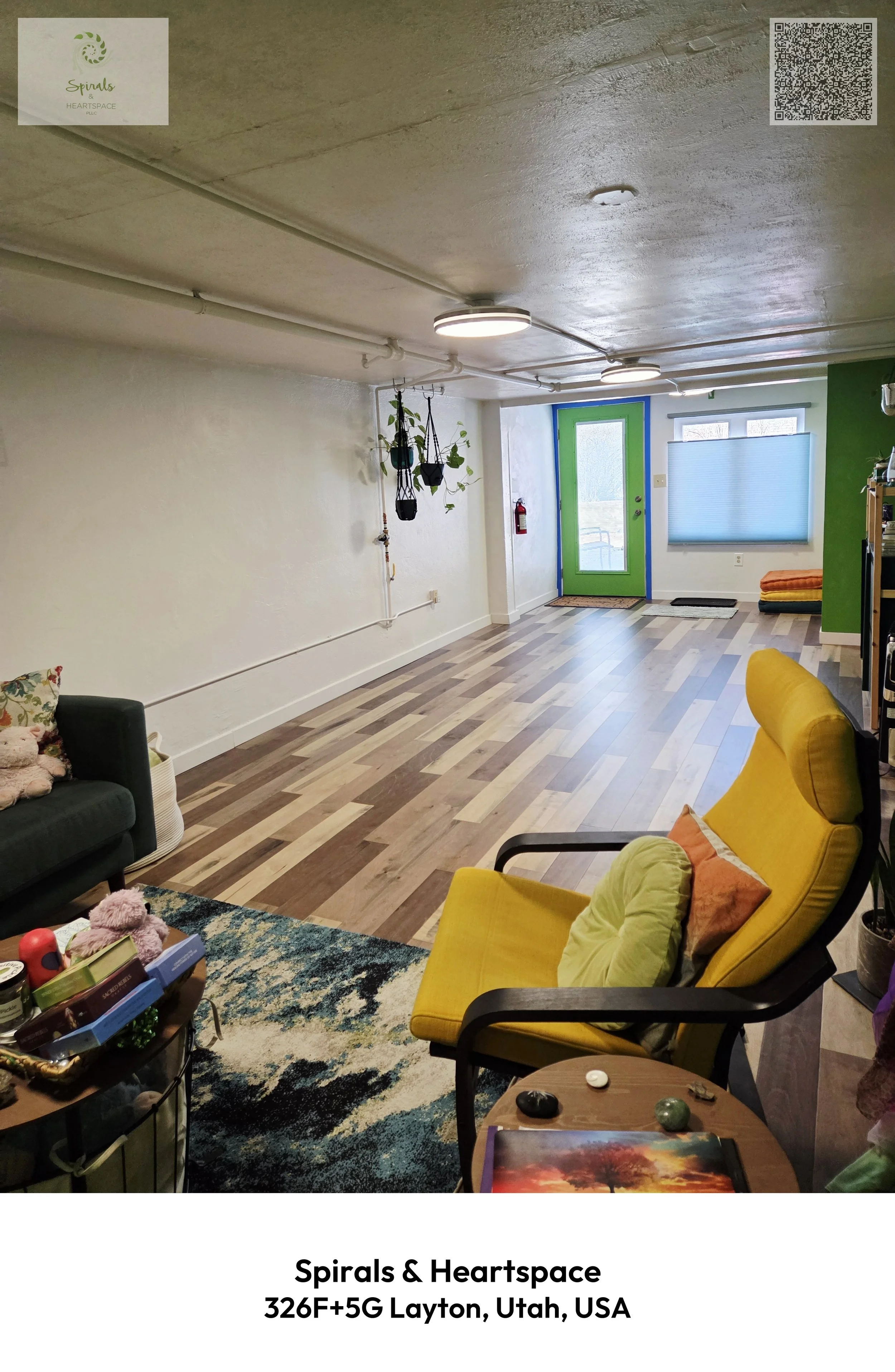
Spirals & Heartspace
Name: Spirals & HeartspaceAddress: 534 W Gentile St, Layton, UT 84041
Phone: (385) 301-5252
Website: https://spiralsandheartspacehealing.com/
Hours:
Sunday: Closed
Monday: 9:30 AM – 7:00 PM
Tuesday: 9:30 AM – 7:00 PM
Wednesday: 9:30 AM – 7:00 PM
Thursday: 9:30 AM – 7:00 PM
Friday: 9:30 AM – 7:00 PM
Saturday: Closed
Open-location code / plus code: 326F+5G Layton, Utah, USA
Coordinates: 41.0604503, -111.9762128
Map/listing URL: https://www.google.com/maps/place/Spirals+%26+Heartspace/@41.0604503,-111.9762128,766m/data=!3m2!1e3!4b1!4m6!3m5!1s0x875303311f1d4d1b:0xc6859e5e3fceafe2!8m2!3d41.0604503!4d-111.9762128!16s%2Fg%2F11x781dbvb
Embed iframe:
Socials:
Instagram: https://www.instagram.com/spiralsheartspace/
LinkedIn: https://www.linkedin.com/company/spirals-and-heartspace-pllc
TikTok: https://www.tiktok.com/@spiralsheartspace
X: https://x.com/SpiralsHea61786
YouTube: https://www.youtube.com/@SpiralsHeartspace
The practice is led by Ande Welling, a licensed clinical mental health counselor with training in dance/movement therapy, somatic work, EMDR, trauma care, relational neuroscience, and embodied attachment.
Listed services include therapy, coaching, consultation, authentic movement, trauma therapy, somatic therapy, grief counseling, movement therapy, and attachment therapy.
The practice serves adults who want a deeper body-aware approach to trauma, anxiety, depression, grief, burnout, self-abandonment, family patterns, and relationship wounds.
Spirals & Heartspace offers both in-person sessions in Layton and online therapy for clients in Utah.
The practice is locally positioned for clients in Layton, Kaysville, Farmington, Syracuse, Clearfield, Clinton, Roy, Ogden, Bountiful, Davis County, and nearby northern Utah communities.
The office is listed at 534 W Gentile St in Layton, with public listing hours Monday through Friday from 9:30 AM to 7:00 PM.
Prospective clients can call (385) 301-5252 or visit https://spiralsandheartspacehealing.com/ to ask about consultation options, session fit, and scheduling.
The public map listing for Spirals & Heartspace can help clients verify the Gentile Street office before planning an in-person appointment.
Popular Questions About Spirals & Heartspace
What is Spirals & Heartspace?
Spirals & Heartspace is a Layton, Utah psychotherapy and coaching practice offering somatic, trauma-focused, expressive arts, movement-based, and attachment-informed support for adults.
Who is the therapist at Spirals & Heartspace?
The official site identifies Ande Welling as the therapist, coach, movement facilitator, and guide behind Spirals & Heartspace. Listed credentials include LCMHC, BC-DMT, NCC, GL-CMA, BSE, EMDR Trained, and CCTP-II.
Where is Spirals & Heartspace located?
The matching public listing and LinkedIn profile list the address as 534 W Gentile St, Layton, UT 84041.
Does Spirals & Heartspace offer online therapy?
Yes. The official FAQ states that therapy is available in person or through a HIPAA-compliant telehealth platform for clients who live in Utah.
What services does Spirals & Heartspace provide?
Listed services include therapy, coaching, consultation, authentic movement, trauma therapy, somatic therapy, grief counseling, movement therapy, and attachment therapy.
What makes somatic therapy different from traditional talk therapy?
The official Layton page explains that somatic therapy works with body sensations, movement, and physical experience because trauma and emotional patterns can be held in the nervous system, not only in thoughts.
Do clients need dance experience for movement therapy?
No. The official Layton FAQ says no dance training or special physical ability is required, and that movement therapy uses a client’s natural capacity for movement to access emotions and process experiences.
Does Spirals & Heartspace accept insurance?
The official FAQ says the practice does not take insurance directly, but may provide superbills or bill for out-of-network benefits when applicable. Clients should confirm current reimbursement options directly before scheduling.
What are Spirals & Heartspace’s listed hours?
The matching public listing shows Monday through Friday from 9:30 AM to 7:00 PM, with Saturday and Sunday closed. Appointment availability should be confirmed directly.
How can I contact Spirals & Heartspace?
Call (385) 301-5252, visit https://spiralsandheartspacehealing.com/, or use the listed social profiles: https://www.instagram.com/spiralsheartspace/, https://www.linkedin.com/company/spirals-and-heartspace-pllc, https://www.tiktok.com/@spiralsheartspace, https://x.com/SpiralsHea61786, and https://www.youtube.com/@SpiralsHeartspace.
Landmarks Near Layton, UT
Spirals & Heartspace is located on West Gentile Street in Layton, Utah, with in-person therapy available locally and online therapy available for Utah residents. Clients near these landmarks can call (385) 301-5252 or visit https://spiralsandheartspacehealing.com/ to ask about somatic therapy, trauma therapy, movement therapy, grief counseling, attachment therapy, and consultation options.
- 534 W Gentile St — The listed office address for Spirals & Heartspace; clients can use the map listing to verify the office before visiting.
- West Gentile Street — The local street connected with the practice’s Layton office location.
- Downtown Layton — A practical local reference point for clients navigating central Layton.
- Layton Hills Mall — A major Layton shopping landmark and useful orientation point for clients traveling through the city.
- Interstate 15 near Layton — A major northern Utah route that helps clients reach Layton from nearby Davis County communities.
- Layton FrontRunner Station — A transit landmark for clients traveling by commuter rail through Davis County.
- Ellison Park — A local park and community landmark in Layton.
- Great Salt Lake Shorelands Preserve — A major natural landmark west of Layton and a recognizable Davis County destination.
- Hill Air Force Base — A major regional landmark near Layton and Clearfield.
- Kaysville — A nearby Davis County city listed in the practice’s surrounding service area.
- Farmington — A nearby Davis County community included in the broader local service-area language.
- Ogden — A nearby northern Utah city; clients can ask whether online Utah therapy or in-person Layton sessions are the best fit.